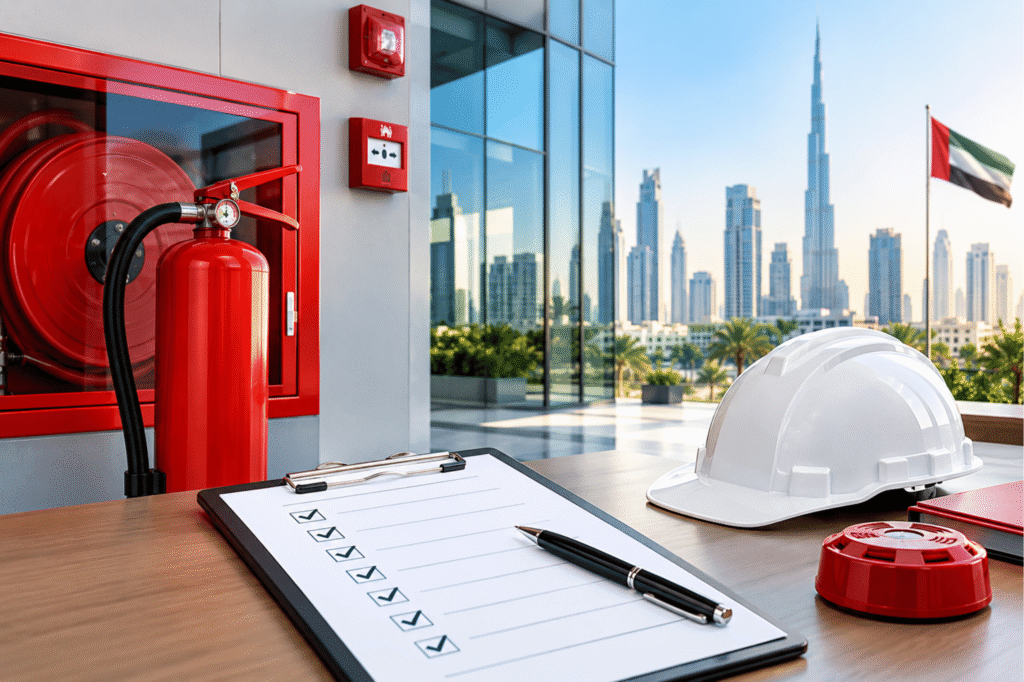
Fire safety is an essential part of protecting any residential, commercial, industrial, or public property. A building may have fire alarms, extinguishers, emergency lighting, fire pumps, sprinklers, and other fire protection systems, but these systems are only effective when they are properly inspected, tested, and maintained.
Regular fire safety inspection in the UAE helps building owners and facility managers identify potential hazards, damaged equipment, system faults, and maintenance requirements before they become serious safety concerns.
For properties in Ajman, Dubai, and other parts of the UAE, a planned fire safety inspection can help maintain reliable protection and support the property’s ongoing safety requirements.
What Is a Fire Safety Inspection?
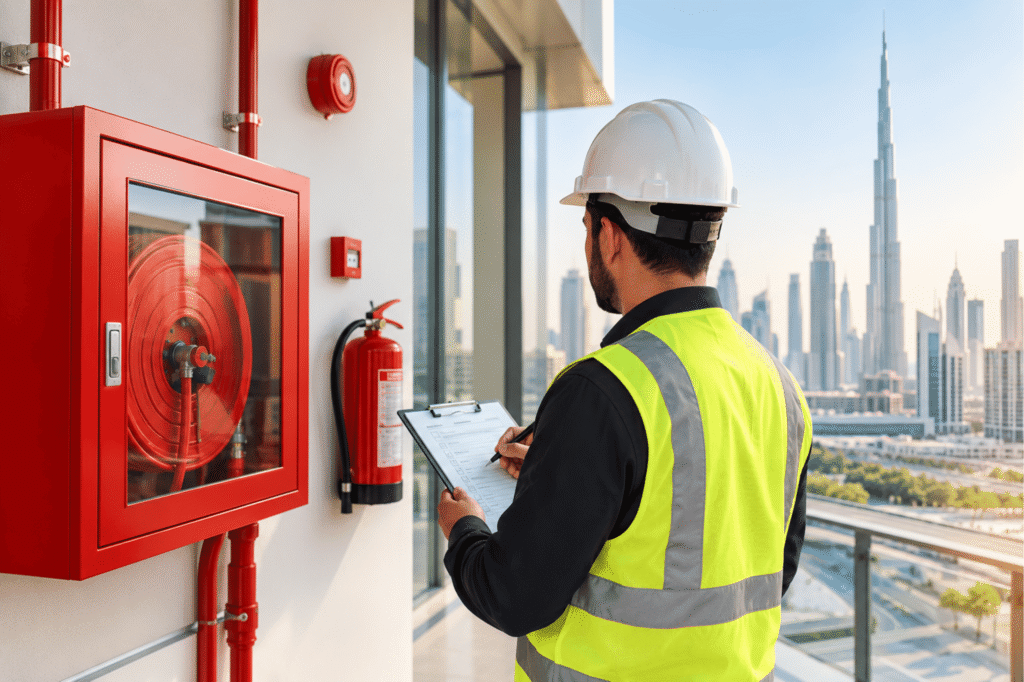
A fire safety inspection is a systematic assessment of a property’s fire protection systems, safety equipment, emergency arrangements, and potential fire hazards.
The inspection can include both the condition of the equipment and its accessibility, functionality, and maintenance status.
Depending on the property, a professional inspection may cover:
- Fire alarm systems
- Smoke and heat detectors
- Manual call points
- Sounders and sirens
- Fire extinguishers
- Fire hose reels
- Fire hydrants
- Sprinkler systems
- Fire pumps
- Emergency lighting
- Exit signs
- Fire doors
- Emergency escape routes
- Fire and gas detection systems
The exact scope depends on the building type, occupancy, installed systems, and applicable requirements.
Why Is Regular Fire Safety Inspection Important?
Fire protection equipment can deteriorate over time. Devices can become damaged, batteries can fail, wiring can develop faults, and access to equipment can become blocked by furniture or stored materials.
A regular inspection helps identify these issues before an emergency occurs.
Some common problems found during inspections include:
- Faulty smoke detectors
- Damaged manual call points
- Fire alarm panel fault indications
- Weak or failed backup batteries
- Damaged emergency lights
- Expired or damaged fire extinguishers
- Blocked fire exits
- Obstructed firefighting equipment
- Fire pump faults
- Damaged hose reels
- Sprinkler system issues
- Poor housekeeping
- Electrical fire hazards
Identifying such problems early allows property owners to arrange corrective action and maintenance.
Fire Alarm System Inspection
The fire alarm system is a critical part of a building’s early warning system.
A professional inspection may include checking the fire alarm control panel, detectors, manual call points, sounders, batteries, zones, indicators, and other connected devices.
Important components include:
Smoke Detectors
Smoke detectors should be maintained in suitable condition and kept free from excessive dust, physical damage, or obstruction.
Manual Call Points
Manual call points allow occupants to manually activate the fire alarm during an emergency. Their accessibility and physical condition should be checked.
Sounders and Sirens
Alarm sounders need to provide an appropriate warning throughout the protected areas.
Fire Alarm Control Panel
The panel should be checked for alarm and fault indications, power supply, battery condition, and other relevant system conditions.
Regular testing and maintenance help ensure that the alarm system remains ready to provide an early warning when required.
Fire Extinguisher Inspection
Fire extinguishers are commonly installed throughout offices, commercial properties, warehouses, factories, residential buildings, and other facilities.
However, simply having an extinguisher on the wall does not guarantee that it will be effective during a fire.
During an inspection, technicians may check:
- Extinguisher type
- Physical condition
- Pressure condition
- Safety pin and seal
- Hose or nozzle
- Signs of leakage or corrosion
- Accessibility
- Mounting arrangement
- Service information
- Suitability for the surrounding fire risk
Fire extinguishers should also remain clearly accessible and should not be hidden behind furniture, boxes, or stored materials.
Fire Fighting System Inspection
A building’s firefighting system may include several interconnected components designed to provide water or other means of fire suppression.
Depending on the property, the system may include:
- Fire hose reels
- Fire hydrants
- Sprinklers
- Fire pumps
- Jockey pumps
- Diesel pumps
- Electrical pumps
- Fire water tanks
- Valves and associated equipment
Regular inspection and preventive maintenance are important because many of these systems may remain unused for long periods and only be required during an emergency.
Fire Pump Maintenance
Fire pumps are an important part of many building firefighting systems.
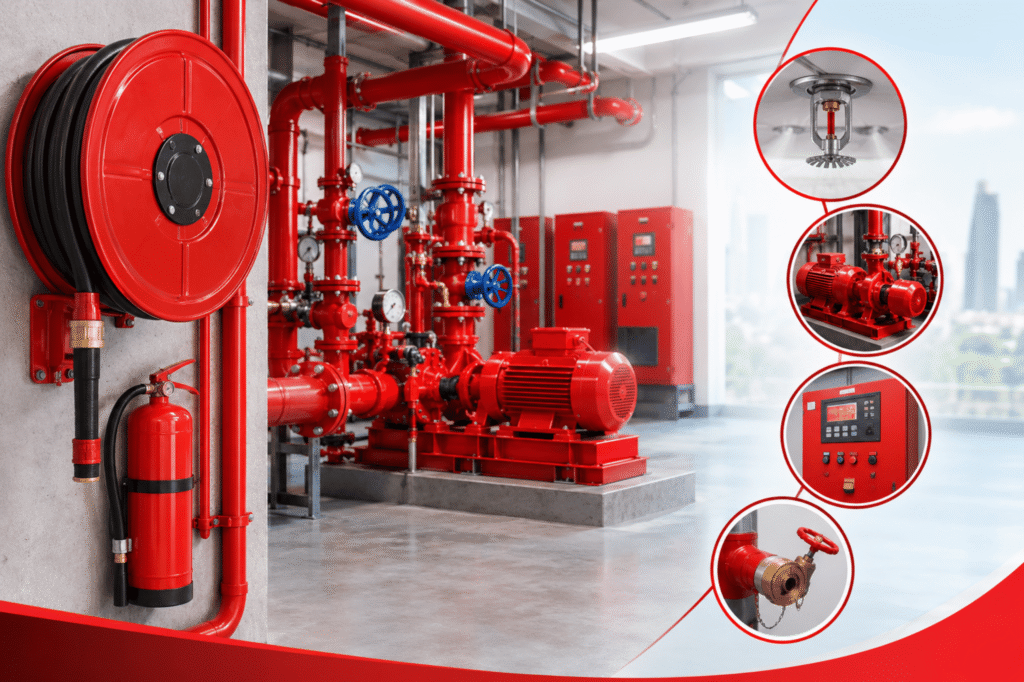
A typical fire pump arrangement may include an electric pump, diesel pump, and jockey pump depending on the system design.
Inspection and maintenance may identify issues such as:
- Pump starting problems
- Pressure abnormalities
- Battery problems
- Controller faults
- Valve issues
- Leakage
- Electrical supply problems
- Diesel engine problems
- Unusual vibration or noise
Regular testing helps ensure that the fire pump system is maintained in suitable operating condition.
Emergency Lighting and Exit Signs
Emergency lighting plays an important role when normal electrical power is interrupted.
During an emergency, occupants need to be able to identify escape routes and exits quickly.
Inspection may include:
- Emergency light operation
- Battery backup
- Charging condition
- Exit signs
- Directional signs
- Physical damage
- Visibility
- Escape route illumination
Emergency exits and pathways should also remain clear and accessible.
Fire Safety Inspection for Different Properties
Every property has different fire safety risks.
Offices
Office buildings should pay attention to fire alarms, extinguishers, emergency lighting, electrical equipment, fire exits, and evacuation arrangements.
Warehouses
Warehouses may contain large quantities of combustible materials and stored products. Storage arrangements, access to firefighting equipment, electrical systems, and escape routes require careful attention.
Factories
Industrial properties can involve machinery, electrical equipment, production processes, gases, chemicals, and other hazards. Their fire protection requirements may therefore be more complex.
Hotels
Hotels accommodate people who may not be familiar with the building layout. Fire alarms, emergency lighting, exit signs, fire doors, escape routes, and firefighting equipment are therefore particularly important.
Labour Accommodations
High occupancy makes reliable fire detection, alarm systems, emergency lighting, firefighting equipment, and unobstructed escape routes especially important.
Common Fire Safety Problems in Buildings
Many fire safety problems develop gradually.
Some common examples include:
Blocked Fire Equipment
Fire extinguishers, hose reels, manual call points, and other equipment may become blocked by furniture, boxes, or stored materials.
Damaged Equipment
Fire alarm devices, emergency lights, extinguishers, and other equipment can be damaged during renovation, moving activities, or normal building operations.
Electrical Hazards
Overloaded electrical outlets, damaged cables, poor connections, and unsuitable electrical installations can increase fire risk.
Poor Housekeeping
Accumulation of waste, combustible materials, and inappropriate storage can create additional fire hazards.
Lack of Maintenance
A fire protection system that was installed correctly can still become unreliable if regular inspection and maintenance are neglected.
How Often Should Fire Safety Systems Be Inspected?
The appropriate inspection and maintenance frequency depends on the property, the type of fire protection system installed, the occupancy, manufacturer recommendations, applicable requirements, and the relevant authority requirements.
Instead of waiting for a system to develop a visible fault, building owners and facility managers should establish a planned inspection and maintenance schedule.
Maintaining proper records of inspections, testing, faults, repairs, and corrective actions can also help facility teams manage fire safety more effectively.
Benefits of Professional Fire Safety Inspection
A professional inspection can help property owners and facility managers:
- Identify potential fire hazards
- Detect system faults
- Maintain fire protection equipment
- Improve emergency preparedness
- Identify damaged components
- Plan preventive maintenance
- Maintain inspection records
- Reduce unexpected system failures
- Improve overall fire safety awareness
Most importantly, regular inspection helps ensure that fire protection systems are not simply installed but remain properly maintained and ready for use.
Fire Safety Inspection Services in Ajman & Dubai
Firecon Fire Fighting Equip & Maint Fixing L.L.C. provides fire safety and fire protection services for residential, commercial, industrial, and other properties.
Our services include:
- Fire Safety Inspection
- Fire Alarm System Installation & Maintenance
- Fire Fighting System
- Fire Extinguisher Services
- Emergency Lighting
- Fire Pump Maintenance
- Testing & Commissioning
- Fire Safety Maintenance
- AMC & Maintenance
- Fire & Gas Systems
Whether you manage an office, warehouse, factory, hotel, labour accommodation, commercial building, or other property, Firecon can assist with fire safety inspection and maintenance requirements based on your property’s needs.
Final Thoughts
Fire safety should never be treated as a one-time installation task. Fire protection systems require ongoing inspection, testing, maintenance, and proper management to remain reliable.
From fire alarms and extinguishers to fire pumps, sprinklers, hydrants, emergency lighting, and evacuation routes, every component has an important role in protecting people and property.
If you are looking for fire safety inspection and maintenance services in Ajman, Dubai and across the UAE, contact Firecon to discuss your property’s fire protection requirements.
Firecon — Reliable Fire Safety Solutions for Your Property.