A fire alarm system is one of the first lines of defence when a fire emergency occurs. Its purpose is simple but critical: detect a potential fire, alert occupants, and provide an early warning so appropriate action can be taken.
However, installing a fire alarm system is only the beginning.
Like any other safety system, a fire alarm system requires regular inspection, testing, servicing, and maintenance. Dust, heat, moisture, damaged devices, battery failure, wiring issues, renovation work, and ageing components can all affect system performance over time.
A system that appears normal on the outside may still have faults that are not immediately visible.
This is why regular fire alarm system maintenance in the UAE is an important part of responsible building management.
What Happens When a Fire Alarm System Is Not Maintained?
Imagine a smoke detector developing a fault several weeks before a fire occurs.
The building may still have a fire alarm panel. The detectors may still be installed on the ceiling. The alarm sounders may still be visible.
Everything may appear normal.
But if the affected detector cannot communicate correctly with the control panel, the system may not provide the expected warning when it is needed.
Similar problems can occur with:
- Backup batteries
- Manual call points
- Sounders
- Wiring
- Control panels
- Modules
- Detectors
- Power supplies
- Interfaces and connected devices
Regular maintenance helps identify these problems before they become emergency failures.
What Is Fire Alarm System Maintenance?
Fire alarm system maintenance involves inspecting, testing, servicing, and correcting faults in the installed fire alarm system.
The exact maintenance procedure depends on the system design, equipment manufacturer, building type, and applicable requirements.
A typical system may include:
- Fire alarm control panel
- Smoke detectors
- Heat detectors
- Manual call points
- Sounders and sirens
- Visual alarm indicators
- Input/output modules
- Batteries
- Power supplies
- Alarm zones or addressable devices
- Interfaces with other building systems
Each component has a specific role, and the complete system needs to work together properly.
Why Is Regular Fire Alarm Testing Important?
The main reason for testing is straightforward:
You should not wait for a real fire to discover that your alarm system has a problem.
Regular testing provides an opportunity to identify faults while the building is operating normally.
Testing can help confirm that:
- Detectors are responding appropriately
- Manual call points operate correctly
- Alarm sounders function
- The control panel receives signals
- Fault conditions are identified
- Backup batteries are functioning
- Connected devices communicate properly
- Alarm indications are working as expected
Testing also provides an opportunity to identify changes in the building that may affect the system.
For example, a renovated room may have a newly installed partition that changes the coverage of an existing detector. A new storage area may create an obstruction. Construction work may accidentally damage a device or cable.
Regular maintenance helps bring these issues to attention.
Understanding the Main Components of a Fire Alarm System
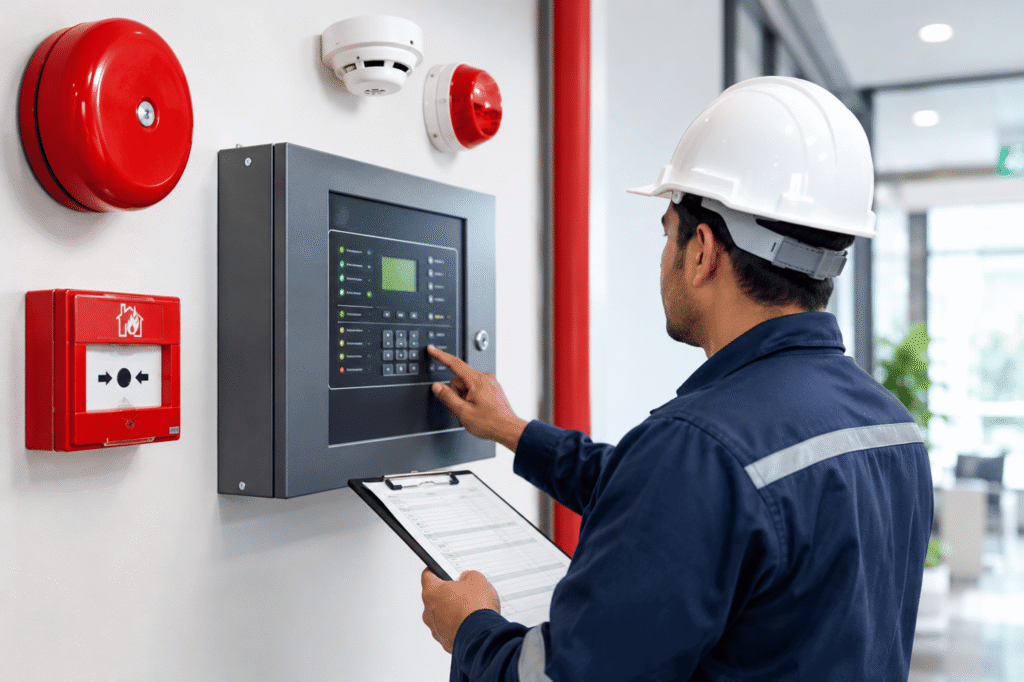
Fire Alarm Control Panel
The control panel acts as the central point of the fire alarm system.
It receives information from connected devices and displays alarm or fault conditions.
During maintenance, technicians may check:
- Alarm indications
- Fault indications
- Power supply
- Battery condition
- System status
- Communication with devices
- Event or fault history where applicable
A panel showing repeated or unexplained faults should not simply be ignored.
Smoke Detectors
Smoke detectors are designed to identify smoke particles associated with a fire and provide an early warning.
Dust, contamination, physical damage, environmental conditions, or inappropriate installation can affect detector performance.
Regular inspection helps identify detectors that require cleaning, replacement, or further investigation.
Heat Detectors
Heat detectors are used in areas where smoke detectors may not be suitable or where the system design requires heat detection.
Their condition, location, and operation should be checked as part of the overall fire alarm maintenance programme.
Manual Call Points
Manual call points allow a person to manually activate the fire alarm.
They should remain:
- Accessible
- Clearly visible
- Undamaged
- Properly identified
- Free from obstruction
A damaged or inaccessible manual call point can affect the ability of occupants to raise an alarm quickly.
Sounders and Sirens
Detecting a fire is only part of the process. Occupants also need to receive the warning.
Sounders and sirens should therefore be checked to ensure that the alarm notification system is functioning appropriately.
In larger properties, different areas may have different notification requirements depending on the system design.
Fire Alarm Batteries: A Small Component With a Big Role
Backup batteries are often overlooked because they are not visible to most building occupants.
However, they can be critical when the normal electrical supply is interrupted.
Battery maintenance may include checking:
- Battery condition
- Age
- Charging
- Connections
- Signs of damage
- System indications
- Replacement requirements
A weak battery can result in fault conditions or reduce the reliability of the system during a power interruption.
For this reason, battery condition should be included in planned fire alarm maintenance.
Common Fire Alarm Problems Found During Maintenance
Fire alarm systems can develop different types of faults over their service life.
Some common examples include:
1. Battery Faults
Old or damaged batteries can cause fault indications and affect backup operation.
2. Detector Faults
A detector may become contaminated, damaged, or fail to communicate correctly with the panel.
3. Wiring Problems
Loose connections, damaged cables, or other wiring issues can cause intermittent or permanent faults.
4. Manual Call Point Damage
Manual call points can be damaged during daily activities, renovation, or accidental impact.
5. Sounder Problems
A faulty sounder may prevent occupants in a particular area from receiving the expected alarm notification.
6. Repeated Panel Faults
A fire alarm panel that repeatedly displays the same fault should be investigated rather than repeatedly reset without identifying the underlying cause.
7. Obstructed Detectors
Changes to room layouts, ceilings, storage areas, or partitions can affect detector coverage.
Fire Alarm Maintenance After Renovation or Construction
Renovation is one situation where fire alarm systems deserve particular attention.
Construction activities can produce dust and debris. Contractors may also move ceilings, walls, partitions, lighting fixtures, or other building elements.
These changes can affect existing fire alarm devices.
After renovation or major modification, the system should be reviewed to determine whether:
- Detector locations remain appropriate
- Devices have been damaged
- New areas require additional detection
- Existing coverage has been affected
- Cables or devices were disturbed
- The alarm system requires modification or testing
A building’s fire alarm system should reflect the current layout and use of the property, not simply the original building arrangement.
Fire Alarm Maintenance for Different Types of Buildings
Offices
Office environments may have large numbers of employees and visitors. Regular testing helps maintain reliable warning throughout work areas, meeting rooms, corridors, and common spaces.
Warehouses
Warehouses may have high ceilings, storage racks, large storage areas, and changing layouts. Fire detection arrangements should be reviewed when storage configurations change.
Factories
Industrial facilities may have machinery, production processes, electrical equipment, gases, and other hazards. Fire alarm maintenance should consider the operating environment and system design.
Hotels
Hotels require reliable fire detection because guests may be unfamiliar with escape routes. Regular maintenance of detection and notification systems is therefore particularly important.
Labour Accommodations
Where occupancy levels are high, reliable detection and alarm notification can be especially important. Maintenance should cover the complete installed system and associated emergency arrangements.
Signs That Your Fire Alarm System May Need Attention
Building owners and facility teams should not wait for the next scheduled service if they notice unusual behaviour.
Contact a qualified fire safety professional if you notice:
- Repeated panel fault messages
- False alarms occurring frequently
- A detector showing a fault
- Sounders not operating as expected
- Damaged manual call points
- Battery fault indications
- Unusual panel behaviour
- Devices damaged during construction
- Missing or disconnected equipment
- Changes to the building layout
- Fire alarm equipment blocked or inaccessible
Ignoring a small warning today can create a much larger problem later.
Fire Alarm Maintenance Is More Than Pressing the Reset Button
One common mistake is treating a fault indication as something that can simply be cleared.
Resetting a fire alarm panel may remove an indication temporarily, but it does not necessarily solve the underlying problem.
Professional maintenance focuses on identifying why the fault occurred.
The goal should be to restore the system to a reliable operating condition, not simply make the panel appear normal.
Benefits of Regular Fire Alarm Maintenance
A planned maintenance programme can provide several benefits:
Early Fault Detection
Problems can be identified before they become emergency failures.
Improved System Reliability
Regular inspection helps keep the installed equipment in suitable operating condition.
Better Emergency Preparedness
A properly maintained alarm system can provide greater confidence that occupants will receive an appropriate warning.
Reduced Unexpected Repairs
Identifying problems early may help prevent more extensive system failures.
Better Maintenance Records
Documented inspections and corrective actions help facility teams track the condition of their fire alarm system.
Longer Equipment Service Life
Appropriate maintenance can help identify components that require cleaning, servicing, or timely replacement.
Professional Fire Alarm Maintenance in Ajman and Dubai
Firecon Fire Fighting Equip & Maint Fixing L.L.C. provides fire alarm and fire safety services for commercial, residential, industrial, and other properties.
Our services include:
- Fire Alarm System Installation
- Fire Alarm System Maintenance
- Fire Safety Inspection
- Testing & Commissioning
- Fire Fighting System Maintenance
- Fire Extinguisher Services
- Emergency Lighting
- Fire Pump Maintenance
- Fire & Gas Systems
- AMC & Maintenance
Whether you operate an office, warehouse, factory, hotel, labour accommodation, commercial property, or other facility, regular fire alarm maintenance can help keep your fire protection system ready for the situations where it matters most.
Final Thoughts
A fire alarm system is designed to provide an early warning when every second can matter.
But the reliability of that warning depends on the condition of the complete system.
Regular inspection, testing, maintenance, timely fault correction, and proper documentation all contribute to effective fire alarm system management.
Don’t wait for an emergency to find out whether your fire alarm system is working properly.
For professional fire alarm system maintenance and fire safety services in Ajman and across the UAE, contact Firecon Fire Fighting Equip & Maint Fixing L.L.C.