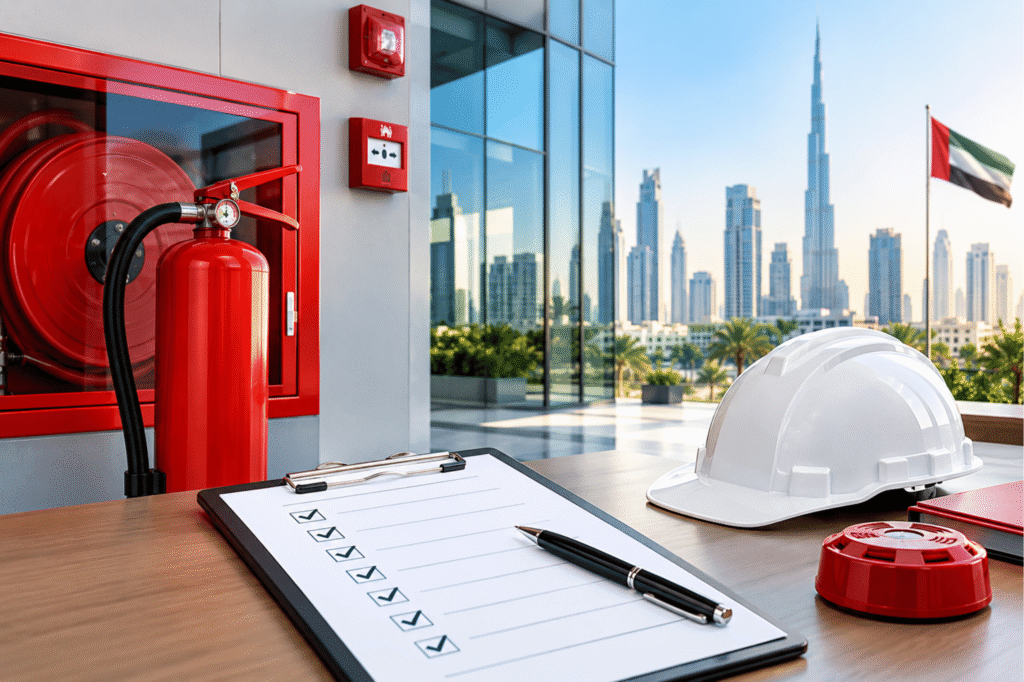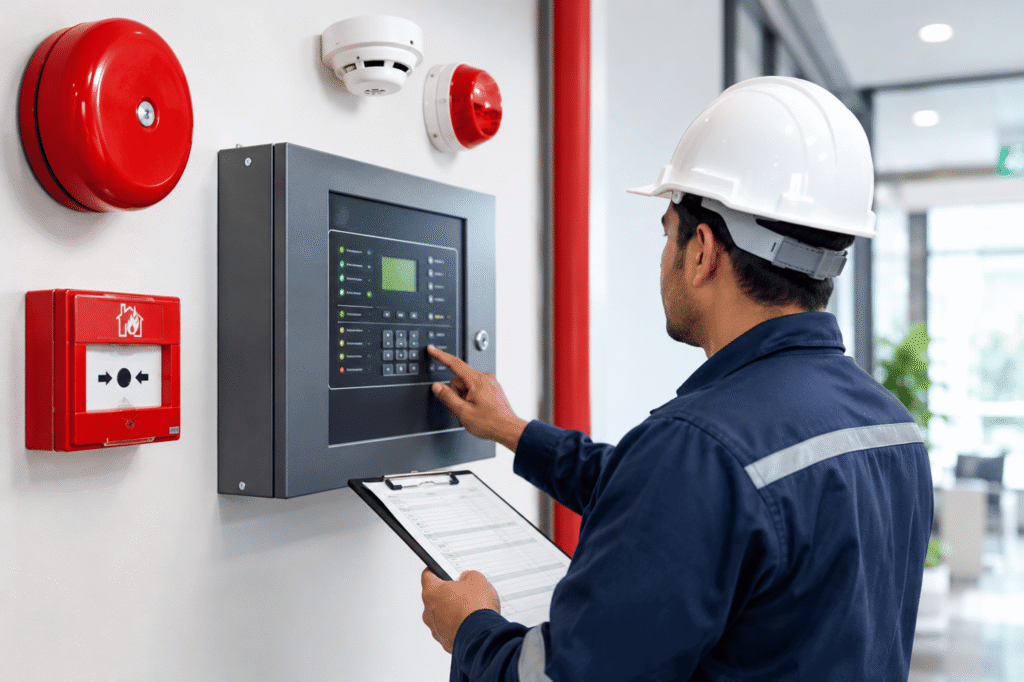
When a fire emergency occurs, there is very little time to react.
A fire alarm can alert occupants. Emergency lighting can help people find their way out. But in many buildings, another system has a very different responsibility: the fire fighting system must provide the equipment and water supply required to control or suppress a fire.
A fire fighting system is therefore much more than a collection of pipes, pumps, valves, and firefighting equipment. It is a coordinated system designed to support emergency response when a fire occurs.
For buildings in the UAE, including offices, warehouses, factories, hotels, labour accommodations, commercial properties, and other facilities, proper installation and ongoing maintenance are essential to keeping these systems ready for use.
What Makes Up a Fire Fighting System?
There is no single fire fighting system that is suitable for every building.
The design depends on factors such as:
- Building size
- Building height
- Occupancy
- Type of activity
- Fire hazards
- Storage arrangements
- Available water supply
- Building layout
- Applicable requirements
Depending on the property, a fire fighting installation may include several different systems working together.
These can include:
Fire Water Tank
Stores the water required for firefighting operations.
Fire Pumps
Provide the required water flow and pressure for the firefighting network.
Jockey Pump
Helps maintain system pressure and compensate for small pressure losses.
Fire Hydrants
Provide firefighting water connections for emergency response.
Fire Hose Reels
Provide a readily accessible firefighting water supply for suitable applications.
Sprinkler Systems
Provide automatic fire suppression or control through sprinkler heads when the system operates.
Piping and Valves
Transport and control water throughout the firefighting network.
Each component has a purpose. A problem in one part of the system can potentially affect the performance of the overall arrangement.
How Does a Fire Fighting System Work?
It is useful to understand the system as a chain rather than as individual equipment.
Water needs to be available.
The system needs to maintain appropriate pressure.
The pumps need to operate when required.
The valves need to be in the correct condition.
The pipe network needs to deliver water to the required location.
The firefighting equipment needs to be accessible and usable.
For example, if a fire protection network experiences a pressure drop, the jockey pump may operate to maintain pressure. If a larger demand occurs, the main firefighting pump arrangement may be required to provide the necessary water supply.
The exact operation depends on the design and configuration of the building’s fire protection system.
This is why simply checking whether a pump exists is not enough. The complete system needs to be considered.
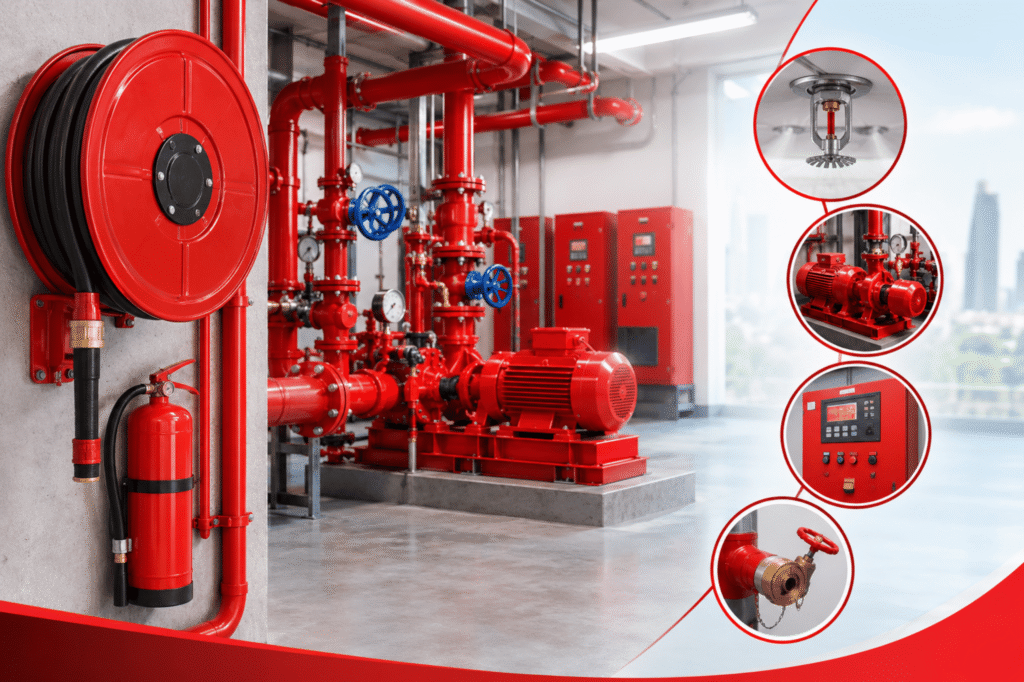
The Fire Pump Room: The Heart of the Water-Based System
For many buildings, the fire pump room is one of the most important areas of the fire protection installation.
It may contain:
- Electric fire pump
- Diesel fire pump
- Jockey pump
- Pump controllers
- Valves
- Pressure gauges
- Piping
- Associated equipment
The condition of the pump room can tell a facility team a lot about the maintenance of the system.
A professional inspection may identify:
- Leakage
- Corrosion
- Damaged components
- Pressure issues
- Controller faults
- Battery problems
- Valve position issues
- Abnormal vibration
- Unusual noise
- Starting problems
- Diesel engine-related issues
The pump room should also remain accessible and free from unnecessary storage or obstruction.
Why the Jockey Pump Matters
The jockey pump is a relatively small pump compared with the main firefighting pumps, but its role is important.
Firefighting systems can experience minor pressure fluctuations. The jockey pump is designed to maintain system pressure within the intended range and compensate for small losses.
If the jockey pump repeatedly starts and stops, it may indicate an underlying issue such as leakage or pressure-related problems.
Ignoring repeated cycling can lead to unnecessary wear and may indicate that the system requires investigation.
Electric and Diesel Fire Pumps
Many firefighting pump arrangements use different pump types to support the water supply.
Electric Fire Pump
The electric pump uses electrical power to provide the required firefighting water flow and pressure.
Its maintenance may involve checking the pump, controller, electrical supply, connections, pressure-related equipment, and associated components.
Diesel Fire Pump
A diesel fire pump can provide an alternative pumping source where the system design requires it.
Its maintenance can involve additional components such as:
- Diesel engine
- Batteries
- Fuel system
- Engine cooling
- Controller
- Starting system
- Associated gauges and equipment
A diesel pump that has been sitting unused for a long period should not simply be assumed to be ready for an emergency. Planned testing and maintenance are important.
Fire Sprinkler Systems: Automatic Protection
Sprinkler systems are designed to respond automatically to heat conditions at individual sprinkler heads, depending on the system design and installed equipment.
A sprinkler system can include:
- Sprinkler heads
- Pipes
- Control valves
- Water supply
- Alarm components
- Pressure-related equipment
- Test and drain arrangements
One common mistake is using the area around sprinkler heads for storage.
Boxes, decorations, partitions, or other objects should not interfere with the intended operation of the system.
If building usage or storage arrangements change, the sprinkler installation may also need to be reviewed.
Fire Hydrants and Hose Reels
Fire hydrants and hose reels provide firefighting water access at designated locations.
During routine inspection, technicians may look for:
- Physical damage
- Leakage
- Accessibility
- Valve condition
- Hose condition
- Cabinet condition
- Pressure-related issues
- Obstructions
A firefighting connection that is difficult to access during an emergency can reduce the practical value of the system.
This is why housekeeping around firefighting equipment is also an important part of fire safety management.
Common Problems That Develop Over Time
Fire fighting systems can develop different problems depending on their age, environment, usage, and maintenance history.
Pressure Loss
Unexpected pressure loss can result from leakage, valve issues, equipment problems, or other system conditions.
A pressure issue should be investigated rather than repeatedly corrected without identifying its cause.
Pump Failure to Start
A pump may fail to start because of electrical, controller, battery, mechanical, or other issues.
This is one of the problems that should receive immediate attention.
Valve Problems
Incorrect valve positions, damaged valves, leakage, or access problems can affect the firefighting network.
Critical valves should be appropriately identified, accessible, and maintained according to the system requirements.
Corrosion
Metal components exposed to moisture or unsuitable environmental conditions can develop corrosion.
Corrosion should not simply be treated as a cosmetic issue. Depending on the affected component, it can eventually influence equipment condition and reliability.
Leakage
Small leaks may appear insignificant at first. However, repeated pressure loss can place unnecessary demand on the system and may indicate a problem that requires investigation.
Damaged or Obstructed Equipment
Firefighting equipment can become damaged during construction, renovation, material movement, or daily operations.
Even a properly installed system can become less effective if equipment is blocked or inaccessible.
What Happens When a Building Is Renovated?
Renovation can change a property’s fire protection requirements.
Walls may be moved. Rooms may be divided. Storage areas may change. New equipment may be installed. Ceiling layouts may be modified.
These changes can affect:
- Sprinkler coverage
- Hydrant accessibility
- Fire hose reel locations
- Pipe routes
- Fire pump requirements
- Equipment accessibility
- Fire compartment arrangements
For this reason, fire protection systems should be reviewed whenever significant building modifications take place.
Preventive Maintenance Is Better Than Emergency Repair
A fire fighting system is an emergency protection system. That means maintenance should ideally happen before an emergency occurs, not after a failure.
Preventive maintenance allows facility teams to identify developing problems and plan corrective work.
A useful maintenance approach includes:
Inspect → Test → Identify → Repair → Record → Monitor
This creates a continuous maintenance cycle instead of waiting for equipment to fail.
Maintenance records can also help facility managers understand recurring problems and plan future replacement or repair work.
Fire Fighting Systems in Commercial and Industrial Properties
Different properties can have very different firefighting challenges.
Commercial Buildings
Commercial properties may require coordinated fire pumps, hydrants, hose reels, sprinklers, extinguishers, alarms, and emergency systems.
Warehouses
Storage height, material type, rack arrangement, and warehouse layout can significantly influence fire protection requirements.
Factories
Factories may have machinery, electrical systems, production equipment, chemicals, gases, and other industrial hazards.
Hotels
Hotels need reliable protection for guest rooms, corridors, kitchens, service areas, and common spaces.
Labour Accommodations
High occupancy makes reliable firefighting and life safety systems particularly important. Equipment should remain accessible, maintained, and ready for use.
When Should You Arrange a Professional Inspection?
Do not wait for a major problem before calling a fire safety professional.
Professional assessment may be appropriate when:
- A pump is not operating correctly
- Pressure is repeatedly dropping
- There is visible leakage
- A valve is damaged
- Equipment is corroded
- A sprinkler area has been modified
- Firefighting equipment is blocked
- A building has undergone renovation
- The system has not been maintained regularly
- The property is starting a new AMC or maintenance programme
A professional assessment can help determine whether the issue is isolated or part of a larger system problem.
Fire Fighting System Services in Ajman, Dubai & the UAE
Firecon Fire Fighting Equip & Maint Fixing L.L.C. provides fire fighting system installation, inspection, maintenance, and related fire safety services for different types of properties.
Our services include:
- Fire Fighting System Installation
- Fire Pump Maintenance
- Fire Hydrant Systems
- Fire Hose Reel Systems
- Sprinkler Systems
- Fire Extinguisher Services
- Fire Alarm Systems
- Emergency Lighting
- Testing & Commissioning
- Fire Safety Inspection
- Fire Safety Maintenance
- AMC & Maintenance
- Fire & Gas Systems
Our approach focuses on understanding the condition of the installed system, identifying maintenance requirements, and helping property owners and facility teams maintain reliable fire protection.
Final Thoughts
A fire fighting system should never be viewed as just a collection of equipment installed inside a building.
It is a complete protection network where pumps, water supplies, pipes, valves, hydrants, hose reels, sprinklers, and associated equipment all have a role to play.
Regular inspection and preventive maintenance help identify problems before they become emergency failures.
Whether you manage a commercial building, warehouse, factory, hotel, labour accommodation, or another property, keeping your fire fighting system properly maintained is an important part of responsible fire safety management.
Need professional fire fighting system inspection or maintenance in Ajman, Dubai and across the UAE? Contact Firecon for reliable fire protection solutions tailored to your property.